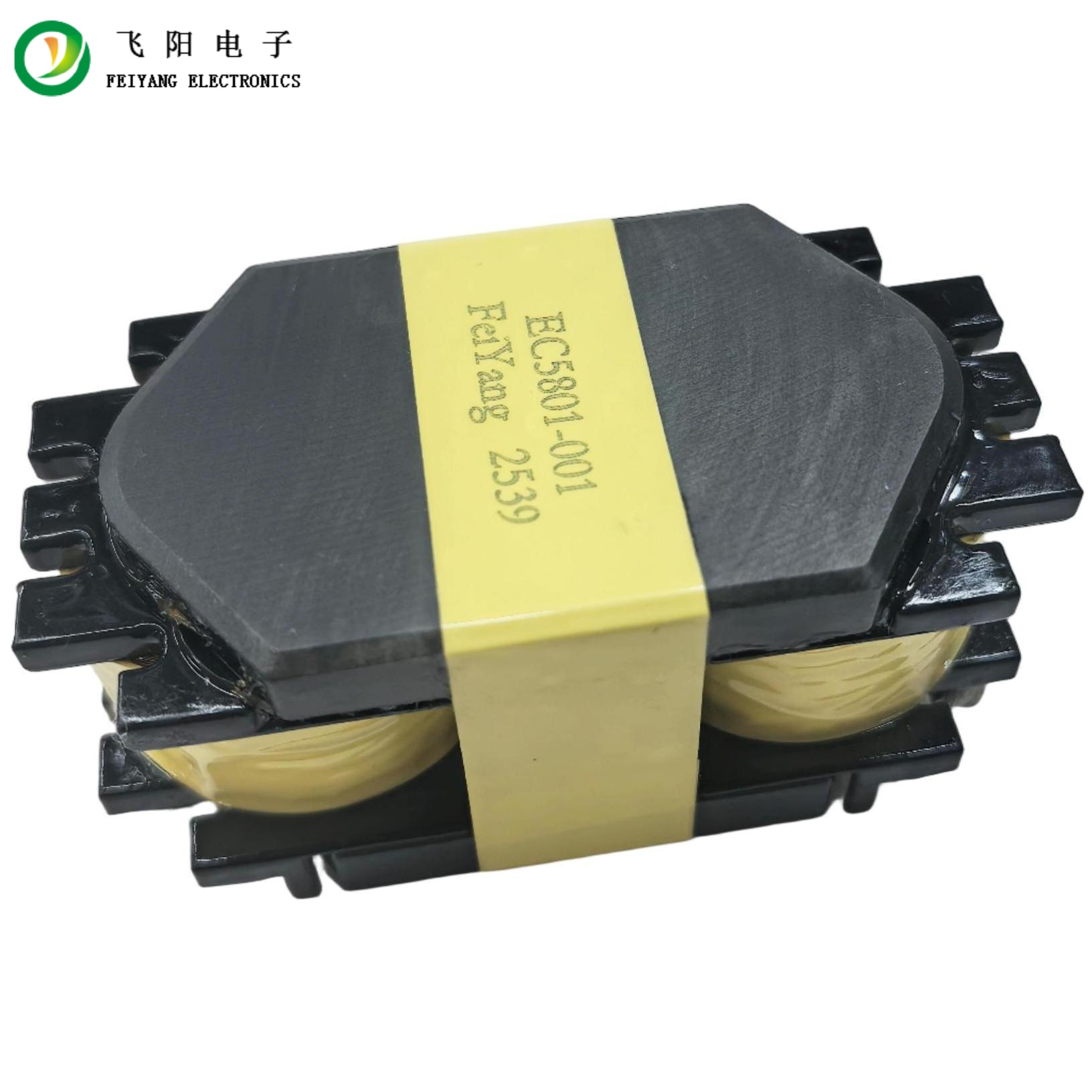
In high-frequency transformer design and material selection, the CTI of a material is of particular importance. It affects not only the creepage distance of the transformer, but also its safety and service life.
The "CTI" of high-frequency transformer materials is the abbreviation of Comparative Tracking Index — the relative tracking index of an insulating material. It is defined as the highest voltage at which an insulating material can withstand 50 drops of a 0.1% ammonium chloride electrolyte solution without forming a tracking path on its surface.
CTI is a key electrical property of materials; it determines the maximum voltage leakage path that a material surface can withstand. The higher the CTI, the shorter the required creepage distance, the stronger the material's resistance to electrical tracking and leakage current, and the more suitable it is for high-voltage and high-frequency applications.
Commonly used insulating materials are classified into four groups by CTI value (per IEC 60112 / IEC 60664-1):
The commonly used bakelite (phenolic molding compound) materials PM-9630 and PM-9820 belong to Group IIIa (PM-9630: measured CTI = 175 V per IEC 60112; PM-9820: CTI within 175–250 V per its UL Yellow Card), while the plastic materials WH9100 and WH8100 belong to Group I, meeting the CTI ≥ 600 V requirement.
 +86 0519-83330902
 sales@feiyangelec.com